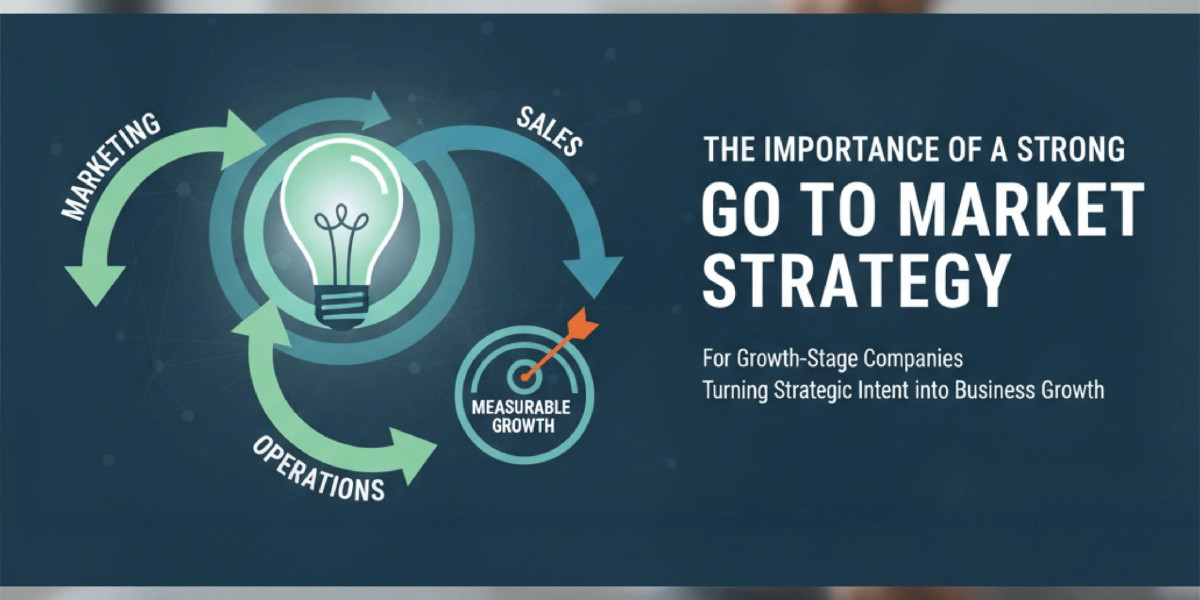

Launching a new product or entering a new market requires more than having a good idea. Businesses need to understand their customers, identify the right opportunities, communicate value clearly, and create a practical plan for reaching the market. This is where a customer-centric go-to-market strategy becomes important.
A well-planned approach places customer needs at the center of every decision, from defining the target audience to selecting marketing channels and measuring results. Businesses seeking structured guidance can use Go-to-Market Consulting Services in Bangalore to develop strategies that connect products with relevant customer segments and support sustainable growth.
What Is a Customer-Centric Go-to-Market Strategy?
A go-to-market strategy is a structured plan for introducing a product, service, or solution to a specific market. A customer-centric approach goes one step further by focusing on what customers actually need, value, and expect.
Instead of beginning with the question, "How can we sell this product?", businesses can ask:
- Who needs this solution?
- What problem are they trying to solve?
- What influences their purchasing decisions?
- How do they evaluate available options?
- Which channels do they prefer?
- What value would encourage them to take action?
Answering these questions helps businesses create a market strategy based on customer understanding rather than assumptions.
Start With a Clear Understanding of the Target Audience
The foundation of an effective go-to-market strategy is knowing who the product is intended for. A broad audience may appear attractive, but trying to reach everyone can make messaging unclear and marketing resources less effective.
Businesses can segment their audience based on factors such as industry, location, company size, purchasing behavior, customer needs, and business challenges. Creating detailed customer profiles helps teams understand the priorities and expectations of different segments.
This information can then guide product positioning, messaging, pricing, and channel selection.
Identify the Customer Problem
Successful market strategies usually begin with a genuine customer problem. Understanding that problem allows businesses to explain their solution in a way that feels relevant.
For example, a business offering a technology solution should clearly communicate how it addresses a specific operational challenge rather than simply listing technical features.
Customer interviews, surveys, market research, feedback, and behavioral data can provide useful insights into recurring pain points. These insights can help businesses refine both their product offering and their market communication.
Build Clear and Relevant Positioning
Positioning explains why a product matters to a particular audience. Strong positioning connects the customer's problem with the value provided by the solution.
A clear positioning strategy should communicate:
- The target audience
- The problem being addressed
- The value of the solution
- The key differentiating factors
- The expected outcome for customers
When positioning is clear, marketing and sales teams have a consistent foundation for communicating with potential customers.
Develop Customer-Focused Messaging
Customers interact with brands across multiple touchpoints, including websites, social media, email, advertisements, sales conversations, and online content. Consistent messaging across these channels helps create a more recognizable customer experience.
However, consistency does not mean using identical content everywhere. Messaging should be adapted to the needs of each audience segment and stage of the buying journey.
A potential customer discovering a solution for the first time may need educational information, while someone closer to making a purchase may want pricing details, implementation information, or proof of value.
Choose the Right Market Channels
Customer-centric strategies also consider where target audiences spend their time and how they prefer to research products.
Depending on the business model, relevant channels may include:
- Search marketing
- Social media
- Email marketing
- Content marketing
- Events and webinars
- Partnerships
- Direct sales
- Industry communities
The goal is not to use every available channel. Instead, businesses should prioritize channels that provide meaningful access to their target customers.
Organizations exploring Go-to-Market Consulting Services in Delhi can use strategic planning to evaluate market opportunities, customer segments, and channel choices before investing heavily in a launch.
Align Marketing and Sales Teams
A go-to-market strategy becomes more effective when marketing and sales teams work toward shared objectives. Both teams should have a common understanding of the target customer, product positioning, messaging, qualification criteria, and expected outcomes.
Marketing can generate awareness and qualified interest, while sales can provide direct insights from customer conversations. Sharing this information helps businesses identify objections, refine messaging, and improve the overall customer journey.
Use Data to Improve the Strategy
A go-to-market strategy should not remain fixed after launch. Customer behavior and market conditions can change, making continuous measurement important.
Businesses can track metrics such as:
- Website engagement
- Lead generation
- Conversion rates
- Customer acquisition cost
- Sales cycle length
- Customer retention
- Revenue generated
These indicators can reveal which parts of the strategy are performing effectively and where adjustments may be needed.
Data should be combined with qualitative customer feedback to create a complete picture of market performance.
Plan for Market Expansion
Customer-centric planning is also useful when businesses enter new markets. Different locations and customer groups can have different expectations, purchasing behaviors, and competitive conditions.
Before expanding, businesses should evaluate market demand, customer preferences, pricing expectations, distribution channels, and regulatory considerations.
For organizations considering Go-to-Market Consulting Services in Mumbai, a structured market-entry plan can help identify relevant customer segments and establish an approach that fits the local business environment.
Create a Flexible Launch Framework
A successful launch does not necessarily depend on getting everything perfect from the beginning. Businesses can use phased launches, pilot programs, customer testing, and feedback loops to learn before making larger investments.
This approach allows teams to identify potential challenges early and make improvements based on real-world responses.
Flexibility is particularly valuable for businesses entering unfamiliar markets or introducing new products where customer behavior may be difficult to predict.
Conclusion
Customer-centric go-to-market strategies help businesses move beyond product-focused launches and build plans around genuine customer needs. By understanding the target audience, identifying problems, developing clear positioning, selecting suitable channels, and continuously analyzing results, organizations can create stronger foundations for market entry and growth.
Whether businesses explore Go-to-Market Consulting Services in Bangalore, Go-to-Market Consulting Services in Delhi, or Go-to-Market Consulting Services in Mumbai, the central principle remains the same: understand the customer first and build the market strategy around that understanding. A thoughtful, flexible, and data-informed approach can help businesses create meaningful customer experiences while adapting to changing market opportunities.