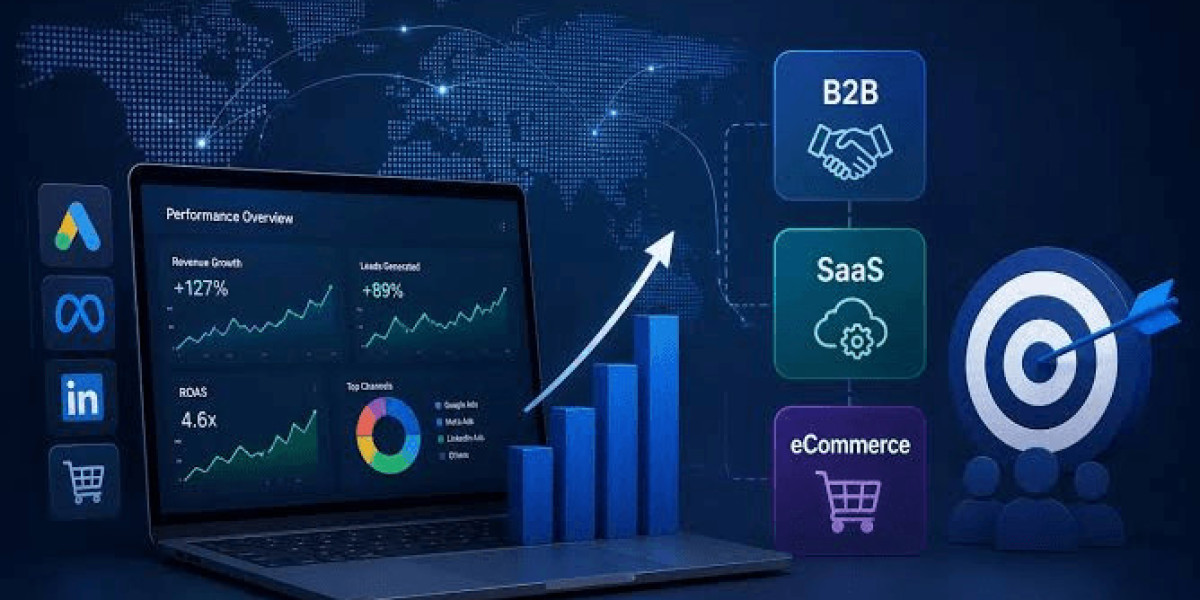

B2B marketing has become increasingly dependent on accurate audience targeting, measurable campaigns, and relevant communication. Businesses are no longer relying only on broad visibility to attract potential customers. Instead, they are using data to understand audience behavior, identify opportunities, and create campaigns that align with specific business goals. A data-driven approach can help organizations improve how they attract prospects, nurture interest, and convert qualified opportunities into meaningful business relationships.
Performance marketing provides a structured way to connect marketing activities with measurable outcomes. By combining audience insights, digital advertising, conversion tracking, content, and continuous optimization, B2B organizations can build campaigns that are focused on performance rather than visibility alone.
Understanding the B2B Customer Journey
B2B purchasing decisions are often more complex than consumer purchases. A potential customer may interact with several pieces of content, visit a website multiple times, compare solutions, and consult different stakeholders before making a decision.
This longer journey means that businesses need to understand what happens at different stages. Awareness campaigns can introduce a solution to relevant audiences, while educational content can provide additional information. Retargeting and lead-generation campaigns can then encourage interested prospects to take the next step.
Mapping these stages allows marketers to create communication that matches the prospect's level of interest instead of presenting the same message to everyone.
Using Data to Identify Relevant Audiences
Data plays an important role in determining who should see a campaign. B2B marketers can analyze factors such as industry, company size, professional role, location, website behavior, previous interactions, and conversion activity.
This information can help create more specific audience groups. For example, a campaign designed for technology decision-makers may require different messaging from one targeting financial services professionals. Separating audiences according to relevant characteristics allows businesses to create more focused campaigns.
For organizations targeting professional audiences in California, B2B Performance Marketing Services in Los Angeles can support location-focused strategies that consider the needs and characteristics of businesses operating in the market. Localized targeting can make campaigns more relevant while providing marketers with clearer performance insights.
Creating Campaigns Around Business Objectives
Every performance marketing campaign should begin with a clearly defined objective. Businesses may want to generate qualified leads, increase website enquiries, promote a specific service, increase registrations, or build awareness within a particular market.
Defining the objective first helps determine the appropriate channels, audience segments, creative formats, and conversion actions. Without a clear goal, it can become difficult to determine whether a campaign is producing meaningful results.
Campaign objectives should also be measurable. Establishing specific indicators makes it easier to monitor progress and identify areas that require improvement.
Developing Relevant Content and Messaging
Data can identify an audience, but relevant content helps maintain its attention. B2B customers generally look for information that addresses practical challenges and provides useful context.
Marketing content can include industry articles, guides, research reports, case studies, webinars, videos, and service-focused landing pages. The format should depend on the audience and the stage of the buying journey.
For example, an awareness campaign may promote an educational article, while a later-stage campaign could direct prospects toward a consultation or detailed service page. Matching content to intent can create a more natural progression from initial awareness to conversion.
Optimizing Campaigns Through Continuous Testing
Performance marketing is not a one-time process. Campaigns can be refined based on the information collected after launch. Marketers can test different headlines, advertising messages, visuals, calls to action, audience segments, and landing-page experiences.
Testing allows businesses to identify patterns in audience behavior. If one message generates stronger engagement or another audience produces more qualified enquiries, future campaign activity can be adjusted accordingly.
Organizations targeting major business markets can use B2B Performance Marketing Services in Chicago as part of a strategy focused on measurable audience engagement and conversion activity. Market-specific campaign data can help reveal which approaches are generating useful interactions and where adjustments may be necessary.
Measuring More Than Clicks
Clicks and impressions provide information about campaign visibility, but they do not necessarily demonstrate business value. B2B marketers should consider metrics throughout the conversion journey.
Important indicators may include click-through rate, landing-page engagement, conversion rate, lead volume, cost per lead, qualified lead rate, and eventual sales outcomes. Looking at these metrics together provides a broader view of campaign performance.
A campaign that generates fewer leads may still produce stronger results if those leads are more relevant to the company's target market. This is why performance evaluation should consider lead quality and business outcomes alongside basic advertising metrics.
Building Location-Focused Marketing Strategies
Different markets can have different business environments, audience characteristics, and competitive dynamics. Location-focused performance campaigns allow businesses to adapt their messaging and targeting according to specific markets.
For companies seeking to reach organizations across Texas, B2B Performance Marketing Services in Houston can form part of a localized strategy. Campaigns can be developed around relevant industries, professional audiences, geographic targeting, and business objectives.
Location-based performance marketing can also make reporting more useful. Marketers can compare campaign behavior across markets and identify where audiences are responding most strongly to particular messages or offers.
Connecting Marketing With Sales
Performance marketing becomes more valuable when marketing and sales teams work from shared objectives. Marketing teams can use campaign data to understand which audiences and messages are generating leads, while sales teams can provide feedback about lead quality.
This feedback loop can help improve future targeting and content. Information from sales conversations may reveal common customer questions, objections, or purchasing requirements that can be incorporated into future marketing campaigns.
A connected process helps reduce the gap between generating a lead and developing it into a genuine business opportunity.
Creating Sustainable B2B Marketing Performance
Data-driven marketing provides businesses with a framework for making informed campaign decisions. Instead of depending entirely on assumptions, marketers can use measurable information to understand audience behavior, evaluate campaign performance, and continuously refine their strategies.
Effective B2B performance marketing combines accurate targeting, relevant content, clear objectives, conversion tracking, testing, and ongoing optimization. When these elements work together, businesses can create marketing campaigns that are more closely connected to their commercial goals.
As B2B customer journeys continue to become more digital, a structured and measurable approach can help organizations build stronger connections with professional audiences while creating opportunities for sustainable growth.