
Market Overview
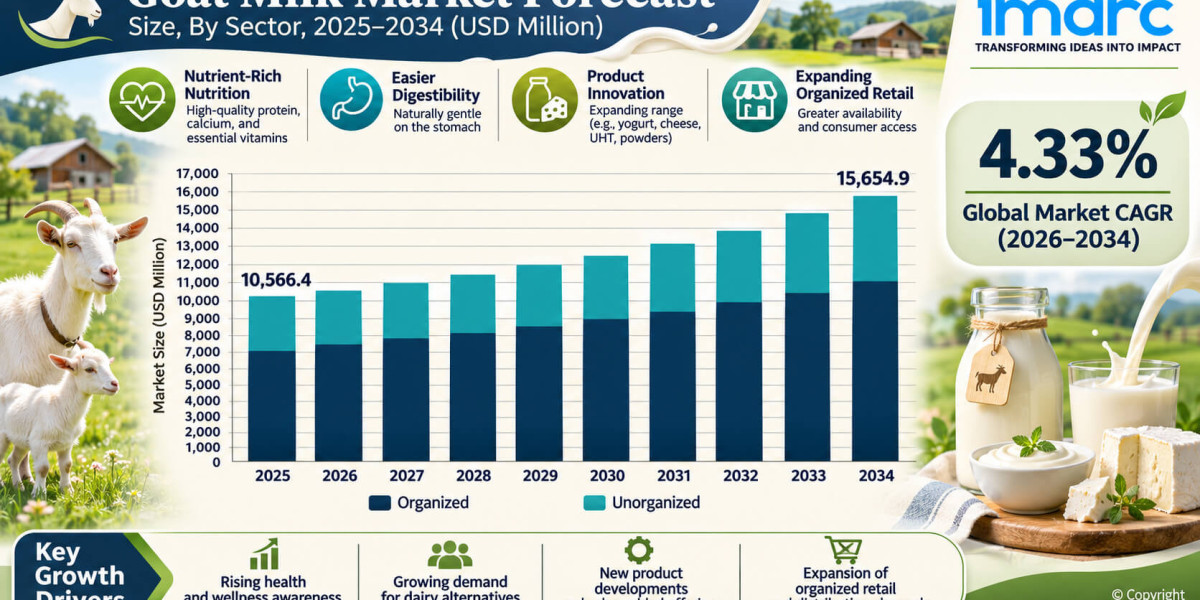
The global goat milk market is experiencing significant growth as consumers increasingly prioritize nutritional benefits, digestive wellness, alternative dairy products, and functional food ingredients. The market reached USD 10,566.4 Million in 2025 and is projected to reach USD 15,654.9 Million by 2034, expanding at a CAGR of 4.33% during 2026–2034. North America dominated the market in 2025, accounting for over 38.0% of the global market share.
The industry is being influenced by rising health consciousness, increasing lactose intolerance, an expanding geriatric population, product diversification, and growing demand for premium dairy alternatives. Innovations in dairy processing, cold chain logistics, sustainable goat farming, and value-added dairy products are also creating new opportunities for manufacturers worldwide.
Goat Milk Market Snapshot
Base Year: 2025
Historical Period: 2020–2025
Forecast Period: 2026–2034
Market Size (2025): USD 10,566.4 Million
Market Forecast (2034): USD 15,654.9 Million
CAGR (2026–2034): 4.33%
Leading Region: North America
Dominant Sector Segment: Organized
Dominant Product Type Segment: Liquid Milk
Leading Distribution Channel: Supermarkets and Hypermarkets
Distribution Channel Share: 63.8% in 2025
North America accounted for over 38.0% of the global goat milk market in 2025, supported by increasing consumer interest in alternative dairy products, established retail infrastructure, and growing awareness of the nutritional properties of goat milk.
Request a Sample Report for Detailed Evaluation: https://www.imarcgroup.com/goat-milk-market/requestsample
What Is Driving Goat Milk Market Growth?
Rising Health Consciousness and Demand for Nutrient-Rich Dairy Alternatives
Increasing consumer awareness of personal care, nutritional wellness, and natural ingredients is creating new growth opportunities across the global goat milk market. Goat milk is gaining attention for its nutritional properties and versatility, including its applications in food, beverages, and personal care products. Its composition, which includes proteins, calcium, potassium, and medium-chain fatty acids, is contributing to growing consumer interest in goat milk-based products.
The expanding preference for natural and ingredient-conscious products is also supporting the growth of the goat milk cosmetics market. Goat milk is increasingly incorporated into skincare formulations, soaps, lotions, moisturizers, and facial cleansers due to its association with moisturizing and skin-conditioning properties. Growing demand for natural, premium, and gentle personal care products is encouraging manufacturers to introduce innovative goat milk-based cosmetic formulations.
Additionally, the goat milk powder market is experiencing growing interest due to the product's convenience, extended shelf life, and versatility across food and nutritional applications. Goat milk powder is increasingly used in infant nutrition, dietary supplements, bakery products, confectionery, and functional food formulations, supporting its adoption among manufacturers and consumers seeking alternative dairy ingredients.
Furthermore, the expanding presence of the goat milk farmers market is strengthening access to fresh, locally sourced, and farm-produced dairy products. Increasing consumer preference for farm-to-table offerings, artisanal dairy products, and direct-to-consumer purchasing channels is encouraging goat milk farmers to expand production and distribution networks. These developments are broadening the commercial applications of goat milk and reinforcing its position across the alternative dairy, functional nutrition, and natural personal care industries.
Growing Geriatric Population and Demand for Bone-Health Products
The expanding global geriatric population is creating new opportunities for goat milk manufacturers. Older consumers are increasingly seeking nutrient-rich foods that support bone health, digestive wellness, and overall nutritional requirements.
Goat milk contains important nutrients, including calcium and other minerals associated with bone health. Its nutritional profile and perceived digestibility are contributing to its popularity among aging consumers.
According to the World Health Organization (WHO), the global population aged 60 years and above is projected to reach 2.1 Billion by 2050, while the population aged 80 years and above is expected to reach 426 Million.
This demographic shift is creating opportunities for manufacturers to develop products specifically targeting older consumers, including fortified goat milk, specialized dairy beverages, and functional nutritional formulations.
The increasing availability of goat milk products through supermarkets, specialty stores, and online platforms is further improving accessibility among consumers seeking convenient nutritional options.
Product Diversification and Increasing Lactose Intolerance Rates
Product innovation is another important factor supporting the growth of the global goat milk market. Manufacturers are expanding beyond conventional liquid milk to introduce a broader range of products, including milk powder, cheese, yogurt, infant formula, flavored beverages, and personal care products.
The increasing prevalence of lactose intolerance is also encouraging consumers to explore alternative dairy options. Goat milk generally contains somewhat less lactose than cow milk, although it is not lactose-free and may not be suitable for people with lactose intolerance.
In addition to food applications, goat milk is increasingly being incorporated into personal care products, including soaps, creams, and lotions, due to its moisturizing properties and natural positioning.
The expansion of goat milk-based infant nutrition products and specialty dairy formulations is further diversifying the market. These developments are enabling manufacturers to reach different consumer groups while creating additional revenue opportunities across food, beverage, and personal care categories.
Goat Milk Market Trends to Watch
Three major trends are shaping the future of the global goat milk industry.
Health-focused consumption: Growing consumer interest in functional nutrition, digestive wellness, and nutrient-dense foods is encouraging demand for goat milk. Its nutritional composition and perceived digestibility are supporting its adoption among health-conscious consumers.
Product diversification: Manufacturers are expanding their product portfolios through goat milk-based cheese, yogurt, milk powder, infant formula, fermented beverages, and personal care products. This diversification is helping companies reach new consumer segments and increase product availability.
Sustainable and artisanal goat farming: Growing interest in locally sourced, ethically produced, and environmentally responsible dairy products is encouraging the development of small-scale goat farming and artisanal dairy businesses. Producers are increasingly emphasizing product quality, traceability, and direct-to-consumer sales.
Technological advancements are also creating new opportunities across the industry. Improved cold chain logistics, packaging technologies, and dairy processing systems are helping manufacturers enhance product shelf life, maintain quality, and expand distribution into emerging markets.
For instance, in 2025, artisanal goat farming continued to develop in Paraguay, led by Agroganadera Don Diego, a family-run agricultural business in Areguá. The farm produces cheeses, yogurts, and soaps using high-yield Alpine and Saanen goats. Through direct sales at local fairs and online channels, the business has developed a brand focused on product quality and consumer trust.
Goat Milk Market Segmentation
The global goat milk market is analyzed by sector, product type, and distribution channel, with each segment reflecting changing consumer preferences, production practices, and retail purchasing patterns.
By Sector
Unorganized
Organized
The organized segment dominated the goat milk market in 2025, supported by its ability to provide consistent product quality, standardized packaging, and compliance with food safety regulations.
Organized manufacturers typically invest in advanced processing technologies, supply chain infrastructure, quality control, and research and development. These capabilities enable them to introduce a broader range of value-added products, including flavored milk, yogurt, cheese, and infant formula.
Established brands also benefit from stronger market recognition and wider distribution networks across supermarkets, hypermarkets, specialty stores, and e-commerce platforms.
Furthermore, increasing consumer awareness regarding food safety, product authenticity, and traceability is encouraging buyers to prefer organized dairy brands over unregulated local suppliers.
As demand for packaged and processed goat milk products continues to expand, organized manufacturers are expected to benefit from investments in production efficiency, product innovation, and distribution infrastructure.
By Product Type
Liquid Milk
Cheese
Milk Powder
Others
Liquid milk dominated the product type segment in 2025, primarily due to its widespread consumption and convenience for everyday dietary use.
Consumers prefer liquid goat milk for its nutritional composition, including calcium, protein, and other essential nutrients. Its perceived digestibility and availability in fresh and UHT (ultra-high temperature) formats are also supporting demand.
The growing preference for natural and minimally processed dairy products is further strengthening the popularity of liquid goat milk.
Its use across households, cafes, health-focused establishments, and specialty food retailers is contributing to its leading position.
Meanwhile, goat milk cheese and milk powder are gaining attention through their applications in premium food products, specialized nutrition, and convenient dairy formulations. Manufacturers are also exploring new flavors, packaging formats, and fortified products to increase consumer engagement.
By Distribution Channel
Supermarkets and Hypermarkets
Specialty Stores
Convenience Stores
Online Sales
Others
Supermarkets and hypermarkets dominated the distribution channel segment in 2025, accounting for approximately 63.8% of the market.
Their leading position is supported by extensive retail networks, product visibility, convenient shopping experiences, and the availability of multiple brands and product variants under one roof.
These retail formats provide consumers with access to fresh and packaged goat milk, cheese, milk powder, and other value-added dairy products. Promotional activities, organized shelf displays, and product quality assurance also influence purchasing decisions.
Supermarkets and hypermarkets are particularly important in urban and semi-urban markets, where demand for premium, organic, and specialty dairy products is expanding.
For instance, in 2025, organic goat milk prices increased by approximately 40% compared with conventional milk, earning it the nickname "white gold" in the dairy sector. This price premium reflects growing interest in natural, sustainable, and ethically produced dairy products.
Specialty stores and online sales channels are also creating opportunities by providing access to niche products, artisanal dairy brands, and premium goat milk formulations.
Regional Goat Milk Market Outlook
North America
North America accounted for over 38.0% of the global goat milk market in 2025, making it the leading regional market. Growth is supported by increasing health awareness, rising demand for alternative dairy products, and established retail infrastructure.
Consumers across the region are increasingly exploring goat milk due to its nutritional composition, perceived digestibility, and suitability for different dietary preferences. The growing popularity of organic, natural, and minimally processed dairy products is further strengthening demand.
The region also benefits from well-developed supermarket networks, specialty food retailers, and online distribution platforms that improve access to goat milk and related products.
Investments in dairy processing technologies, breeding practices, and herd health management are helping producers improve milk quality and production efficiency. Additionally, demand for goat milk-based cheese, yogurt, fermented beverages, and skincare products is expanding the industry's application base.
Asia Pacific
The Asia Pacific goat milk market is supported by rising disposable incomes, increasing health consciousness, expanding urban populations, and growing demand for functional dairy products.
China, India, Japan, Indonesia, and Australia represent important markets within the region. The increasing popularity of premium dairy alternatives and improved awareness regarding nutritional benefits are encouraging consumers to explore goat milk products.
India represents a particularly important opportunity due to its established livestock sector and growing focus on rural dairy development. Government initiatives aimed at improving livestock productivity and supporting small-scale farmers are helping strengthen the production ecosystem.
For instance, the Government of India allocated INR 324 Crores for the National Livestock Mission for 2024–2025. The initiative focuses on creating employment opportunities and improving per-animal productivity to support the production of livestock products, including goat milk.
Additionally, cultural acceptance of goat dairy in countries such as China and India, combined with increasing demand for specialty cheeses, yogurt, and nutritional products, is creating opportunities for manufacturers.
Europe
The European goat milk market is benefiting from an aging population, increasing demand for alternative dairy products, and growing consumer interest in organic and sustainably produced foods.
Countries such as Germany, France, Italy, the United Kingdom, the Netherlands, and Russia represent important markets for goat milk products.
The growing geriatric population is contributing to demand for nutrient-rich dairy alternatives. According to the supplied industry data, individuals aged 65 years and above represented 21.6% of the European Union population in January 2024.
Goat milk's nutritional composition, including calcium and other essential nutrients, is supporting its positioning among consumers seeking products associated with digestive wellness and bone health.
The region also benefits from an established tradition of goat cheese production and specialty dairy consumption. Demand for organic products is creating further opportunities for manufacturers operating under sustainable and responsible farming practices.
According to the supplied report, Europe had approximately 495,000 organic producers in 2023, representing an increase of 1.4% compared with the previous year. Retail sales of organic products reached EUR 54.7 Billion during the same year.
Furthermore, rural development and tourism initiatives across Mediterranean and Alpine destinations are supporting local goat dairies and artisanal food businesses.
Latin America
The Latin American goat milk market is influenced by increasing demand for locally sourced dairy products, sustainable farming practices, and alternative nutritional products.
Brazil and Mexico represent important markets, while several rural and semi-arid regions offer favorable opportunities for goat farming due to the adaptability of goats to diverse environmental conditions.
The growing interest in small-scale agricultural businesses is encouraging the development of artisanal goat milk production and specialty dairy products.
According to the World Bank data cited in the supplied report, agriculture accounts for approximately 8.4% of Brazil's GDP.
This agricultural contribution highlights the importance of livestock and dairy-related activities in the regional economy. Goat farming is gaining attention as a potential livelihood opportunity in rural areas, while food and beverage startups are introducing innovative goat milk-based products.
Increasing consumer awareness regarding sustainable production and locally sourced foods is further supporting market development.
Middle East and Africa
The Middle East and Africa goat milk market is supported by the traditional consumption of goat milk, increasing urbanization, expanding retail infrastructure, and rising demand for alternative dairy products.
Goat milk has an established presence in regional food cultures, where it is used in beverages, cheeses, desserts, and other traditional preparations.
The expansion of supermarket chains and modern retail formats is improving the availability of packaged goat milk and specialty dairy products in urban centers.
Rising disposable incomes are also encouraging consumers to explore premium and value-added dairy products, including flavored goat milk beverages and specialty cheeses.
For instance, according to the Saudi Arabia General Authority for Statistics, the average monthly disposable income of households in Saudi Arabia reached SAR 11,839 in 2023.
Additionally, goat milk is finding applications in halal dairy products and clean-label skincare formulations, creating opportunities beyond conventional food and beverage consumption.
Competitive Landscape
The competitive landscape of the global goat milk market is characterized by the presence of regional and international manufacturers focusing on product innovation, quality enhancement, sustainable sourcing, and distribution expansion.
Companies are increasingly investing in research and development to introduce value-added products, including flavored milk, probiotic-rich beverages, specialty cheeses, and goat milk-based infant formulas.
Strategic collaborations with local dairy farms, improvements in processing infrastructure, and expansion into emerging markets are also important competitive strategies.
Manufacturers are strengthening their market presence through organic and clean-label product offerings, improved packaging technologies, and marketing campaigns emphasizing nutritional benefits and product traceability.
Furthermore, companies are exploring new applications for goat milk in pet nutrition and personal care products, broadening the industry's revenue opportunities.
For instance, at the 2025 Global Pet Expo, Primal Pet Foods introduced its Dehydrated Goat Milk product, offering a shelf-stable alternative to its frozen raw goat milk. Designed for pets, the product contains probiotics, vitamins, and minerals and is intended to support hydration and digestion. Available in single-serve packets and larger pouches, the product demonstrates the expanding applications of goat milk beyond traditional human food consumption.
Major companies identified in the global goat milk market include:
Ausnutria Dairy Corporation Ltd.
AVH Dairy Trade B.V.
Goat Partners International
Granarolo S.p.A.
Meyenberg
Redwood Hill Farm & Creamery
St Helen's Farm
Stickney Hill Dairy Inc.
Woolwich Dairy Inc.
Xi'an Baiyue Goat Dairy Group Co. Ltd. (Baiyue)
Latest Industry Developments
May 2025: Ramat Hagolan Dairy, under the ownership of ZNLR, introduced a new range of goat milk products, including Goat Feta, Tzfatit, Brinza, and other offerings. Its 16% Goat Feta is a Greek-style cheese produced from goat milk, featuring a smooth texture and the characteristic rich flavor of traditional goat cheese.
April 2025: Canada-based goat milk manufacturer Kabrita announced the launch of its High-Calcium Adult Goat Milk Powder in Australia in collaboration with Aumake, its exclusive distribution partner in the country. The product is manufactured using goat milk sourced from Kabrita's farm in the Netherlands.
February 2025: Kabrita launched its Goat Milk-Based Infant Formula for infants aged 0–12 months. Following certification from Health Canada, the product became available to Canadian families through Walmart and Amazon.ca, with plans for expansion into additional retail outlets.
January 2025: Under the Sustainable Canadian Agricultural Partnership, the Governments of Canada and Ontario announced an investment of approximately USD 7.18 Million across 70 projects to improve dairy processing capabilities and food safety. The initiative aims to strengthen the availability of high-quality dairy products and includes support for goat, cow, water buffalo, and sheep milk processors.
About the Author
IMARC Group is a global market research company providing data-driven insights and expert consulting services to businesses seeking to achieve their strategic objectives. With a multidisciplinary team of industry experts, IMARC delivers market intelligence across sectors including energy and mining, construction and manufacturing, automotive, chemicals and materials, hospitality, food and beverages, and more.
Media & Sales Contact
IMARC Group
United States: +1-201-971-6302
India: +91-120-433-0800
United Kingdom: +44-753-714-6104